




When does a consumer think about your brand?
Do you wonder about the reaches of your brand awareness, when is your brand thought of and what motivates consumers to buy your brand?
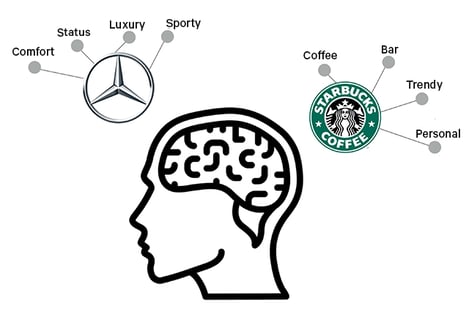
The answer to these questions can be found in the brain of the consumer. A brand is made up of an associative network stored as a memory.
Access to this network makes it possible to determine and optimise the value of your brand. NeuroBranding makes this access possible with RIAT and fMRI.
It gives you the know-how to differentiate your brand from competitors and it increases brand growth.

What determines the success of your brand?
A successful brand has an identifiable associative network in the consumer's brain. The associative network:
- Triggers the thought about your brand at specific and crucial buying moments (Triggers)
- Adds value to your brand, motivating the consumer to purchase (Drives)
- Makes your brand easily recognizable in buying situations (Cues)
NeuroBranding let's you discover the most important associations for your brand. You can use the associations to adjust your branding strategy and campaigns to increase brand growth.
How are brand associations measured?
Brand associations are measured with fMRI and RIAT. These techniques measure rapid and intuitive associations.
Consumers rarely think a long time about brands. The associations that consumers have with most brands are made unconsciously and fragile. Consumers can rarely verbalize these brand associations.
This is why focus groups are ineffective at probing brand associations. Consumers mostly produce rational and socially desirable answers.
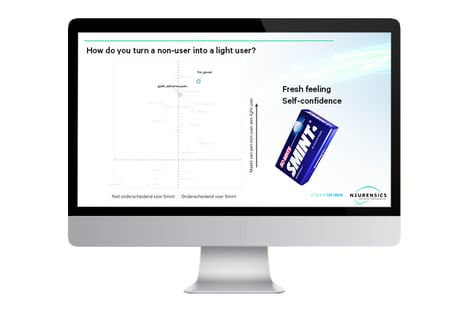
RIAT shows which associations are distinct for your brand and which associations contribute to brand growth. This means higher NPS, purchase intention, switch behavior (turning a non buyer into a buyer.
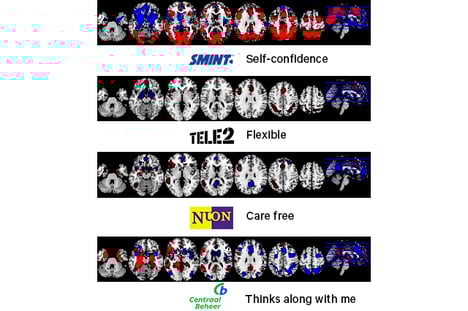
fMRI shows where valuable brand associations can be found in the brain. The robustness of the brain activation can then be used to test whether marketing communications contribute to long-term brand effects.
What's in it for you?
Within 5 business days you will receive:
✓ A personal presentation of the results.
✓ A clear report with unique insights into the brain of your customer. You'll also receive advice on how to increase brand growth.
✓ Unlimited access to a clear and interactive dashboard with the results of the study.